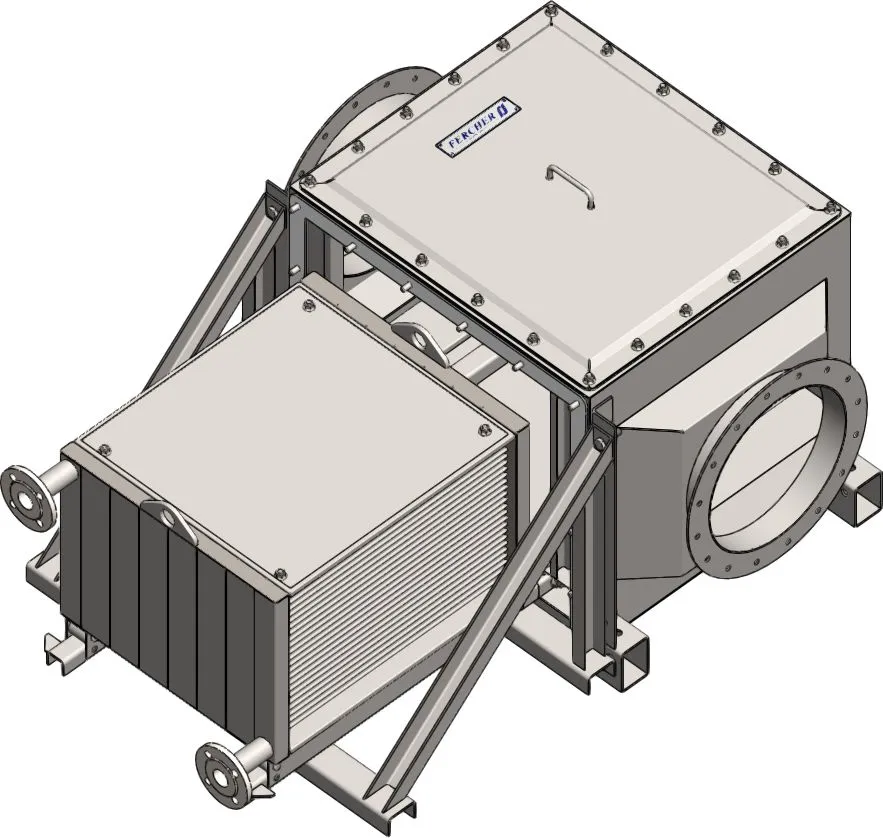
Exhaust gas heat exchangers with flat-tube technology
Flat tubes spaced around 9 mm apart combine high output with low pressure loss.
Why conventional exhaust gas heat exchangers clog
Finned and plate heat exchangers work with clean air. In exhaust gas they usually clog after a short time. Tube bundles take up a lot of space. The exhaust gas mostly flows past the tubes in a laminar stream, and with little turbulence the heat transfer is poorer.
The solution: flat tubes with gaps of around 9 mm
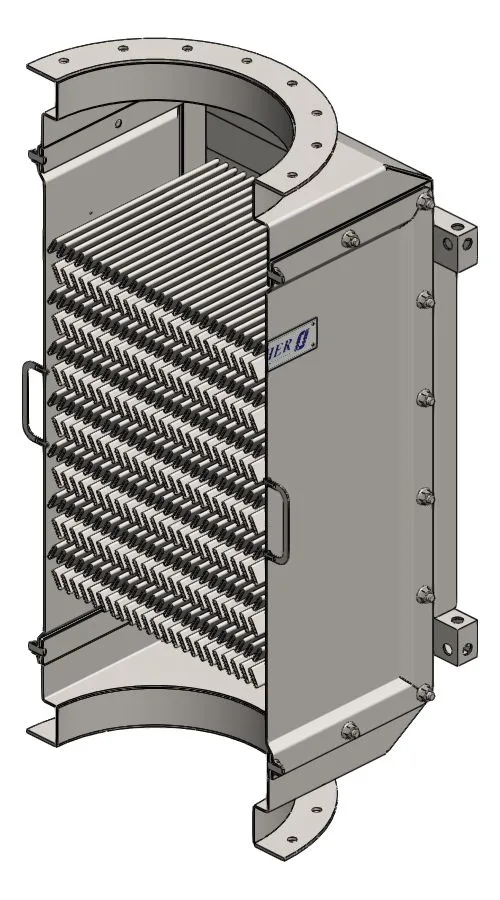
Flat tubes create turbulence on the gas side. This delivers high output in a small space with a very low pressure drop. The gap of around 9 mm gives dirt room to pass and ensures high operating reliability even with heavily contaminated gas (fig. 1).
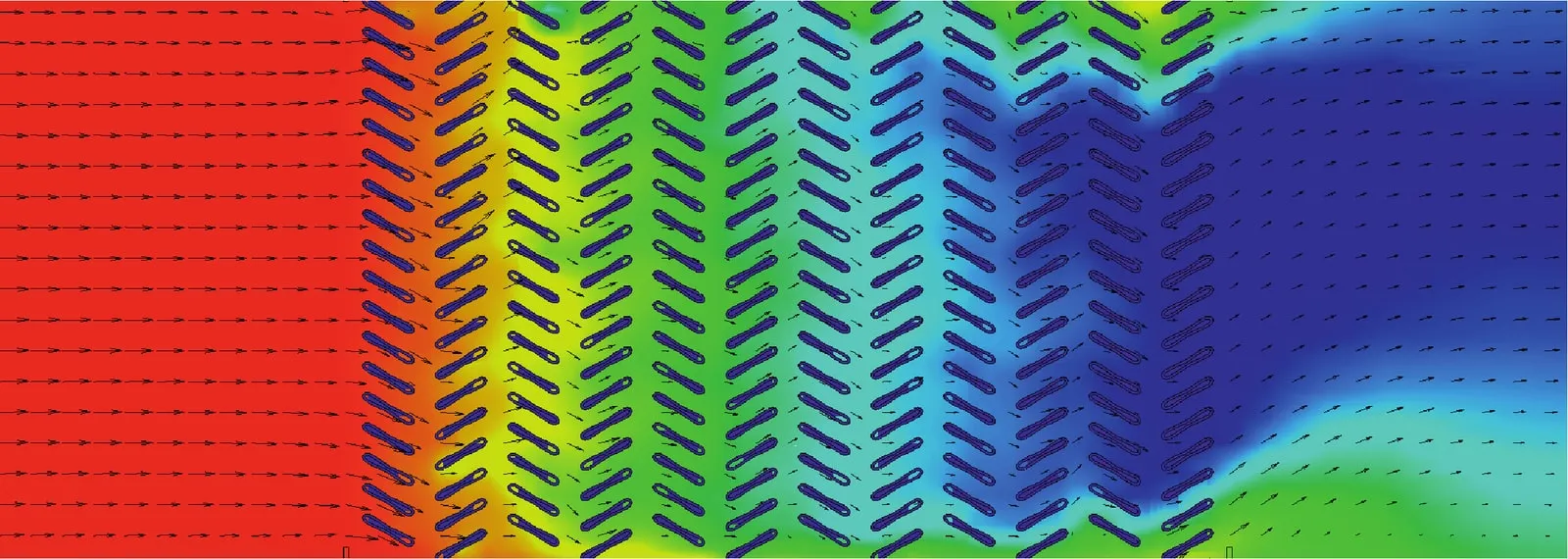
The flow simulation shows the path through the heat exchanger: hot exhaust gas enters on the left (red) and cools from one tube row to the next (blue). The staggered, angled flat tubes redirect the flow and so create the turbulence (fig. 2).
Cleaning without removal
The heat exchanger has inspection and cleaning covers on both sides. Shut off the exhaust gas, let the unit cool down, unscrew them, clean the gas side with a high-pressure cleaner or special brush, and close them again.
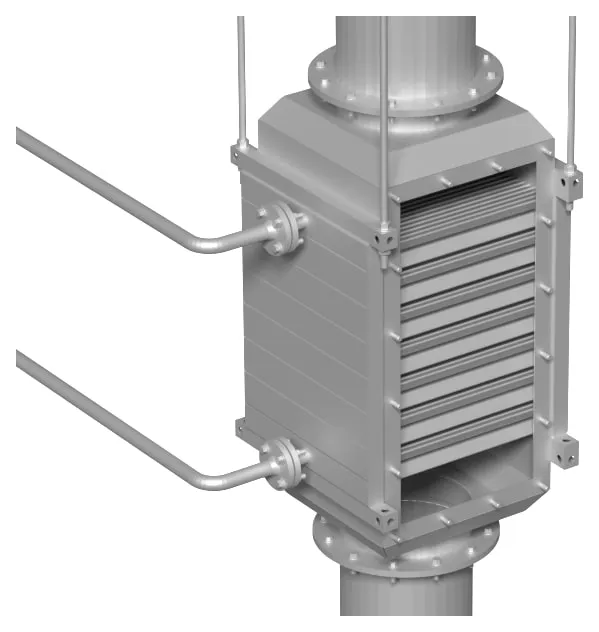
Extractable modules
For heavily contaminated exhaust gas there are types with extractable modules (fig. 3). The module is pulled out without removing the heat exchanger, cleaned for example in an immersion bath, and pushed back in.